
Eye color is mainly determined by genetics. It is one of the genetic traits that depends on the amount and distribution of melanin.
Melanin and eye color
- Eumelanin is associated with dark hair, eyes, and skin.
The eumelanin is associated with dark hair, eyes and skin.
The color of your eyes depends on the amount, distribution, and type of melanin you have in your iris (the part that colors your eye), which is why babies have light eyes at birth. Their melanin-producing cells are immature and produce little melanin. As the months go by, melanin production increases and they become progressively darker.

Genes associated with eye color
- Amount of melanin in the iris: Melanin is the pigment responsible for brown eyes.
- Expression level of OCA2 and HERC2 genes. OCA2 produces the pigment melanin, while HERC2 limits melanin production by synthesizing proteins that regulate melanin production.
When these genes are expressed at high levels, the individual will have dark brown or black eyes. However, when these genes are not expressed sufficiently, then eyes will be lighter.
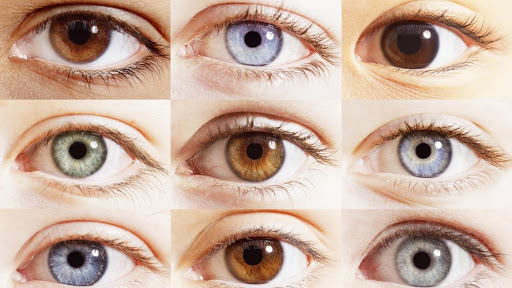
Exceptions in eye pigmentation
Albinism
Albinism is a genetic disorder that causes an absence of pigment in the body. Albinism can affect both the eyes and the skin. Some forms of albinism cause a complete absence of pigment in the body. Other types cause a partial loss of pigmentation. People with albinism usually have lighter eyes and hair, and sometimes have white patches on the skin. Albinism occurs in all races and ethnic groups.
There are two main types of albinism:
- Ocular albinism, which affects only the eyes and is caused by mutations in the TYR gene.
- Ocular albinism, which affects only the eyes and is caused by mutations in the TYR gene.
Heterochromia
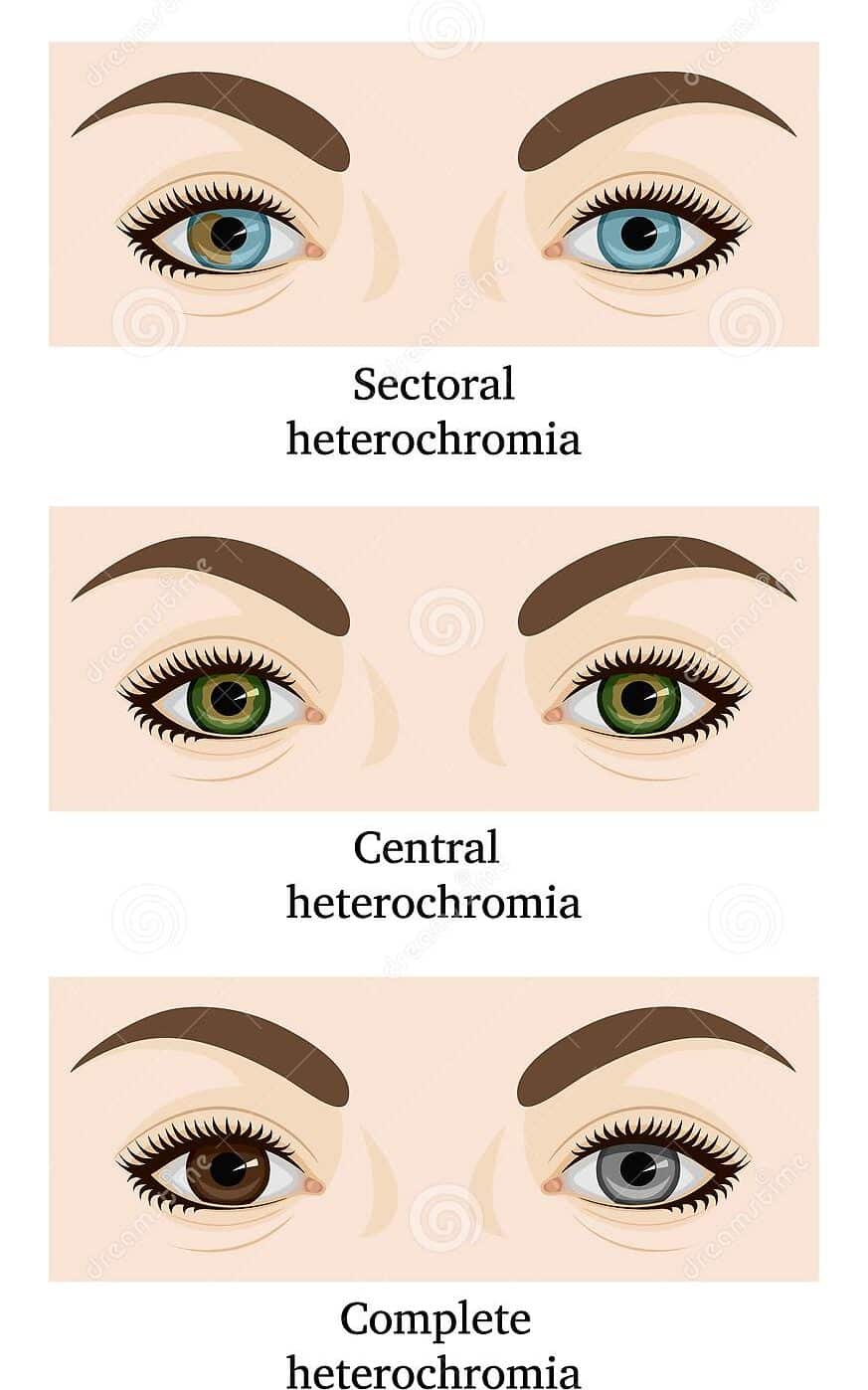
Complete heterochromia: Occurs when one eye is each color.
Complete heterochromia Occurs when one eye is of each color. - Sectoral heterochromia: It occurs when the same iris has several colors.
- Central heterochromia: It occurs when the color in the center of the iris is different from the peripheral part, forming a central ring around the pupil of the eye.
Distribution among the different populations
The Caucasian population has the greatest diversity in eye color.