
Interested in learning about Sardinian ethnic group features?
In this article you will learn about the characteristics of the Sardinian ethnic group in a historical context. Their language, genetic characteristics...
Updated on August 4, 2025
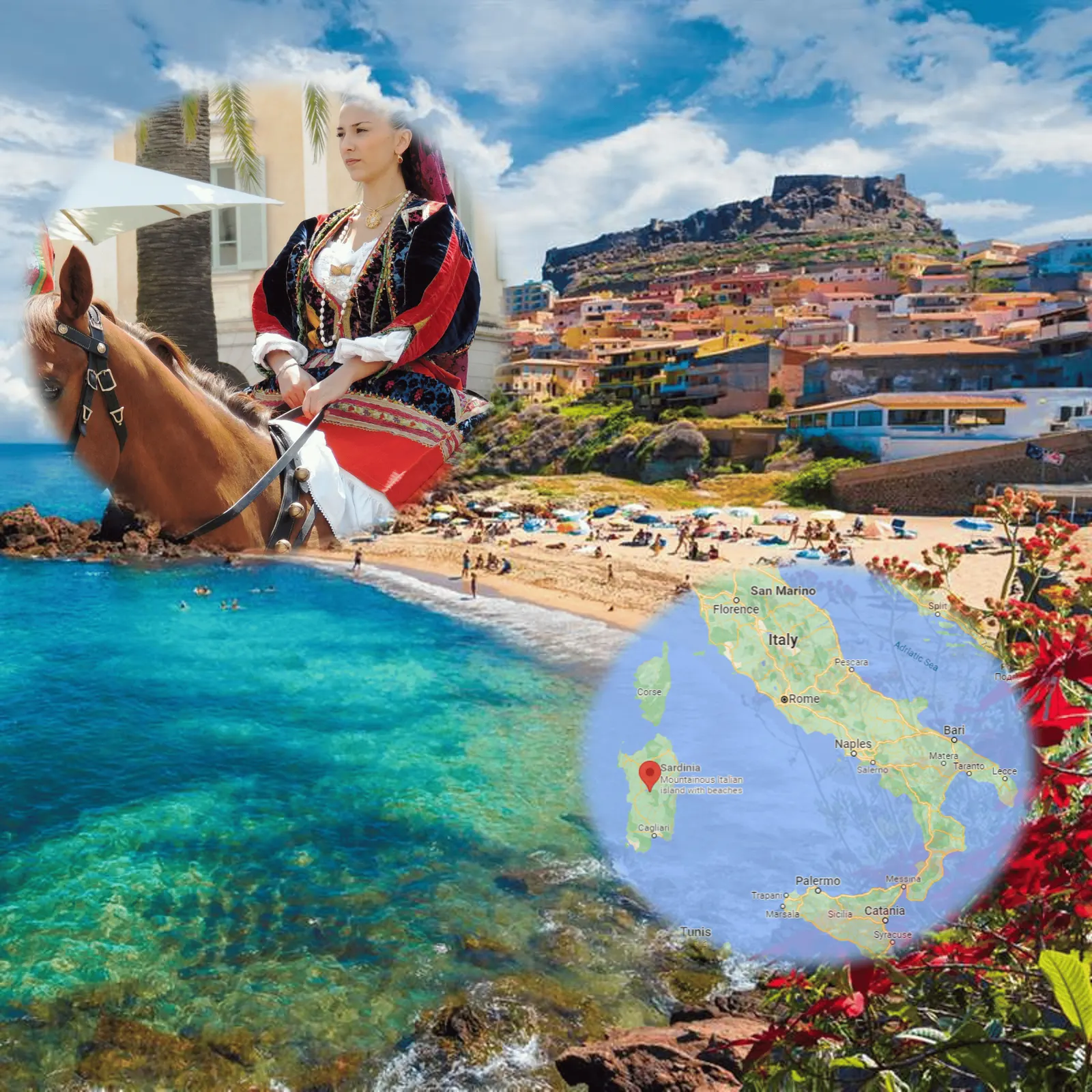
The Sardinian ethnic group is native to the Mediterranean. Italian island of Sardinia. The Sardinians maintain a very little modified DNA since the Paleolithic era.. This means that their genetic information has remained almost unchanged since the first settlers on the island more than 12,000 years ago due to geographic isolation.
On the other hand, the kinship between Sardinians and Basques is quite probable, since similarities in the Y chromosome have been found to prove it.
Italian is spoken on the island of Sardinia, as well as its own language, Sardinian. Although it is increasingly in disuse (UNESCO classifies it as a language in “serious danger of extinction”), its official status is recognized in Italian law.
Some authors consider that Proto-Sardinian and Proto-Basque would have the same common root. Other experts affirm that it would have more similarity with the extinct Etruscan. Be that as it may, first the Phoenicians, then the Carthaginians and finally the Romans remodeled the language and culture. Especially the latter had a significant influence, since Sardinian is considered the closest Romance language to Latin that has survived to the present day.
The Sardinian is one of the longest-lived ethnic groups in the world.. Its members have an average life expectancy of 81.9 years. As a result, they have a significantly higher proportion of centenarians than the world average.
It is also worth noting that the Sardinian community has a high predisposition to certain genetic conditions such as short stature, thalassemia, type I diabetes and celiac disease.
Genetics has an influence, but on its own it doesn't determine your health, your behavior, or your future.