
The Best DNA Test: Comparison of Genetic Analysis Kits
We compare the main DNA tests on the market in 2026 —ADNTRO, TellmeGen, 23andMe, MyHeritage and AncestryDNA— with verified prices, technology, prevention and health reports, haplogroups and which files you actually get to keep.
Updated on October 23, 2026

DNA tests have become an essential tool for learning about our roots, our predisposition to certain diseases and for getting personalised recommendations on nutrition and lifestyle. In this article, we compare the best DNA tests available on the market.
Every price and feature in this comparison was verified on each company’s own website in October 2026.
DNA test comparison table (2026)
| ADNTRO | TellmeGen | 23andMe | MyHeritage | AncestryDNA | |
|---|---|---|---|---|---|
| Kit price | €109 – €169 | €94.99 – €159.99 | $119 – $169 | €89 (deals: €19.90) | €44.99 + shipping |
| Whole genome (WGS) | Yes — €990 | Yes — €329.99 | No | No | No |
| Kit technology | Illumina GSA · 700,000 | Genotyping · 750,000 | Genotyping | Illumina GSA · ~700,000 | Genotyping · ~700,000 |
| Prevention (health) | Yes | Yes | Not outside the US | No | No |
| Genetic interactions with medication | Yes | Yes | US only | No | No |
| Haplogroups | Yes (maternal and paternal) | Yes | Yes | No | No |
| Accepts your file from another company | Yes | Yes | No | Yes | No |
| Files you get | Raw · WGS: +VCF, BAM, FASTQ | Raw · WGS: +VCF, FASTQ, CRAM (3 downloads/year) | Raw | Raw | Raw |
| Valid for clinical use | Yes (whole genome) | CE-IVD under assessment | No | No | No |
| Updates | 3 months + €30/year | €29.99/year | Subscription | Complete Plan | 3 months + subscription |
| Where the company is | Spain | Spain | US (Chapter 11 in 2025) | Israel | US |
Below you will find the detail on each one, plus two sections covering what this table cannot summarise: the real difference between genotyping and a whole genome, and what you actually get to take with you when you download your file.
What a DNA test is and how it works
Most of the companies here —ADNTRO, 23andMe, MyHeritage, TellmeGen, AncestryDNA— use genotyping: they read specific positions in your DNA that are known to vary between people, the so-called SNPs.
Genotyping uses an array with probes complementary to each polymorphism. How many variants get analysed depends on the chip. At ADNTRO we analyse 700,000 polymorphisms with Illumina’s Global Screening Array (GSA), and from there we impute to analyse millions of additional markers. With those variants we calculate polygenic risk scores that point to predispositions in complex diseases, in how you respond to medication or in metabolism.
Genotyping has a ceiling: it only reads what the chip comes with. Whatever is not on the chip does not exist for that analysis. That is why the other technology in this comparison, whole genome sequencing, plays in a different league — and why we have given it a section of its own further down.
ADNTRO
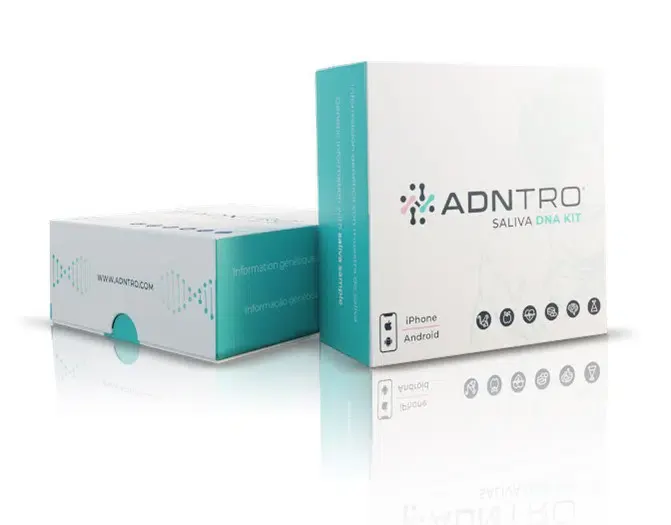
ADNTRO is a Spanish company founded in 2020. We analyse autosomal DNA, Y-chromosome DNA and mitochondrial DNA —the last two are what make haplogroups possible— with Illumina’s GSA technology.

Reports available:
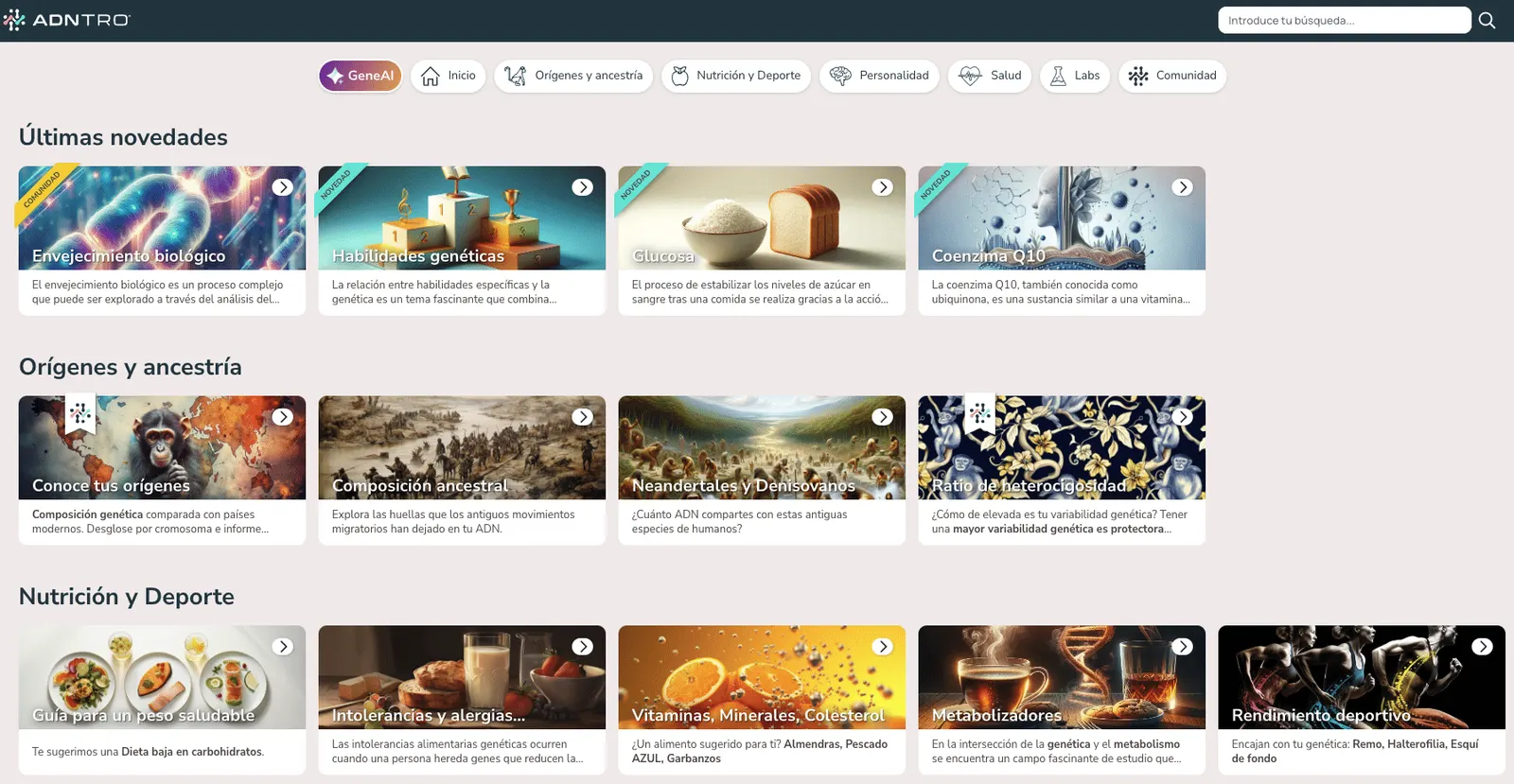
- Ancestry: genetic admixture, ancestral composition, maternal and paternal haplogroups, heterozygosity ratio and Neanderthal DNA.
- Nutrition and guides with dietary recommendations, including food intolerances.
- Fitness and injury risk.
- Personality and behavioural traits.
- Longevity: telomere length, skin ageing, sleep and chronotype.
- Prevention: predisposition to and protection against complex diseases. It is what other companies call “health reports”, focused on what you can keep an eye on with your doctor.
- Genetic interactions with medication: how your body processes drugs, their effectiveness and their toxicity.
- Degree of relatedness between your samples, and other studies.
Prices:
- Kit Entry (ancestry and nutrition) — €109
- Kit Basic (adds fitness, longevity and curiosity studies) — €139
- Kit Premium (every report, including prevention and genetic interactions with medication) — €169
- Epigenetic test – Biological clock, which measures your biological age — €189 —, and the pack combining genetics with epigenetics — €299. ⚠️ These two are only available with shipping to European Union countries.
- Whole genome (WGS 30x) — €990
Your file: you can download your data and also upload a file from another company —from a genotyping kit or from a third-party WGS— to open your reports without buying a new kit.
Clinical use: our whole genome is valid for clinical use. Your doctor will read it; we do not diagnose.
Updates: one update a month, free for the first three months. After that we invite you to subscribe: €30 a year or €120 for life. Your core reports stay yours even if you never subscribe.
Customer reviews: ADNTRO is rated 4.1 out of 5 on Trustpilot, from more than 650 reviews, and also 4.1 out of 5 on its Google listing. People who have taken the test mostly highlight how much information they get and how easy it is to understand.
The best DNA test if you want the most complete option, and the only one in this comparison that hands you your genome in formats you can take anywhere.
TellmeGen
TellmeGen is a Spanish company founded in 2014, the brand of GENELINK, an authorised healthcare centre. Alongside ADNTRO, it is the other Spanish option with health reports and genetic interactions with medication.

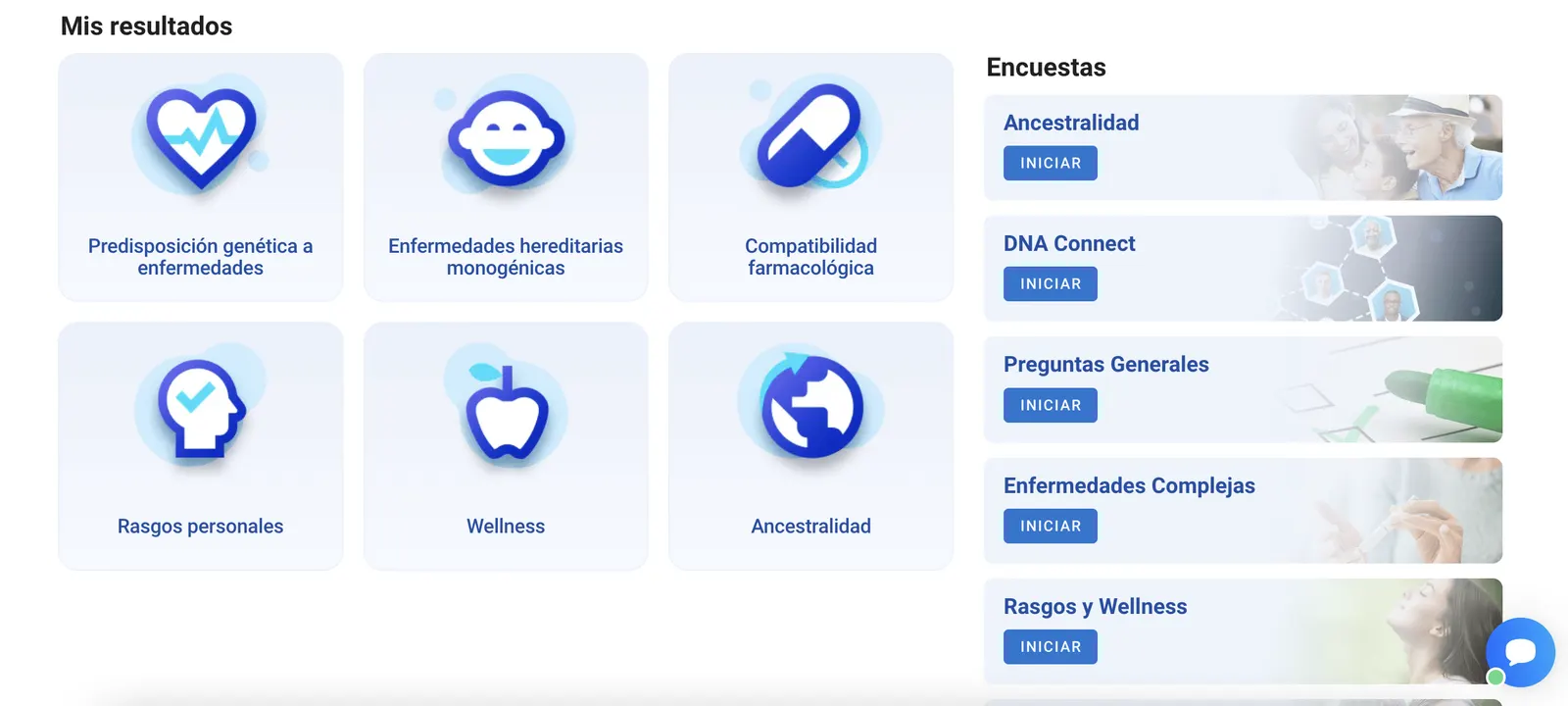
Reports available: ancestry, wellness, personal traits, genetic interactions with medication and genetic predisposition to disease.
Prices:
- Starter (ancestry, wellness and traits) — €94.99
- Advanced (every genotyping report) — €159.99
- Ultra (WGS 30x) — €329.99
Your file: you can upload a file from another company, and download yours up to three times a year.
Updates: with the tellmeGen+ subscription, €29.99 a year after three free months.
What to know before buying their whole genome
TellmeGen’s Ultra costs €329.99 and ours costs €990. That is a big gap and it deserves an honest explanation, because you are not buying the same thing. Everything below comes from their own product page:
- CE-IVD marking is “under assessment”, in their words. Which means they do not have it today, and their analysis is not a certified in vitro diagnostic product.
- They sequence the whole genome and interpret only part of it. Their page says sequencing detects copy number variants, large insertions and deletions, tandem repeats and rearrangements, and that “we expect to incorporate their interpretation in future updates”. Today they interpret single-letter variants and small insertions and deletions. In other words: you pay for full sequencing and, for now, you read part of the variant types a chip would already give you, plus the rare ones.
- The quality floor is 20x. Their control holds the result back if it does not reach that coverage; we work at 30x on average.
It is a good test for anyone who wants a first look at sequencing for a contained price. But if what you want is a genome your doctor can use and that you can reanalyse for decades, €330 and €990 do not buy the same thing, and the next section explains exactly how they differ.
23andMe
23andMe was one of the first direct-to-consumer DNA testing companies, founded in the United States in 2006. It analyses autosomal, Y-chromosome and mitochondrial DNA by genotyping.

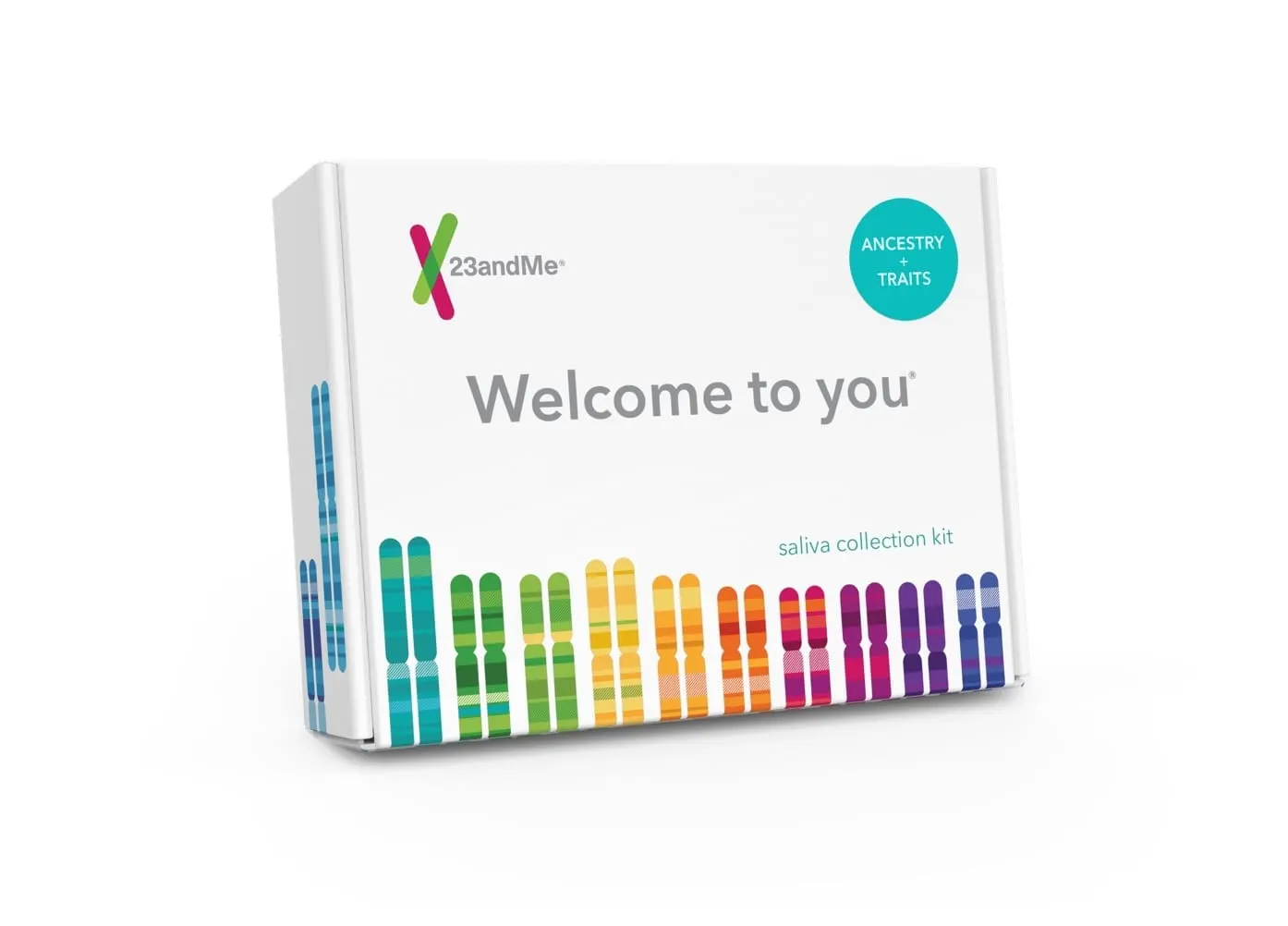
What has changed, and it matters: 23andMe filed for Chapter 11 bankruptcy in March 2025. In July 2025 it was bought by TTAM Research Institute, the non-profit founded by co-founder Anne Wojcicki, and the company now operates from the 23andme.org domain. After the bankruptcy became public, around 1.9 million customers —some 15%— asked for their data to be deleted and their samples destroyed. It also carries the settlements from the 2023 security breach.
Reports and prices available outside the US (October 2026):
- Basic Ancestry (ancestry composition, haplogroups, Neanderthal DNA, DNA relatives) — $119
- Premium Ancestry — $169, renewing at $99 a year
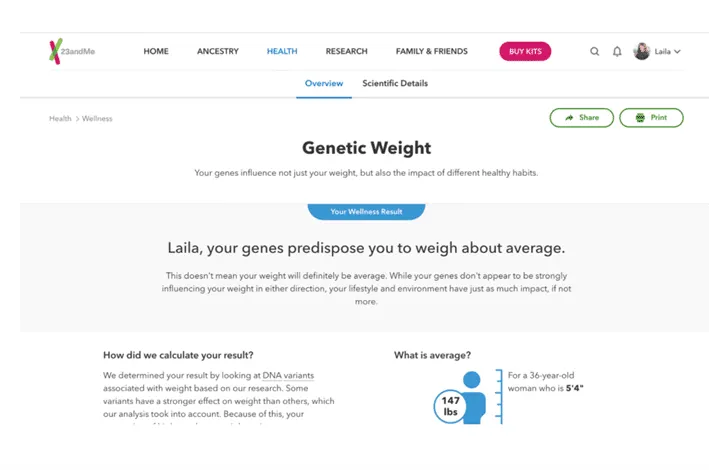
Their health, wellness and genetic interactions with medication reports are not available outside the United States. If you live in Europe, what you are buying is an ancestry test.
Your file: you can download your data, but it does not accept files from other companies.
A good option only if you live in the US and ancestry is what you are mainly after.
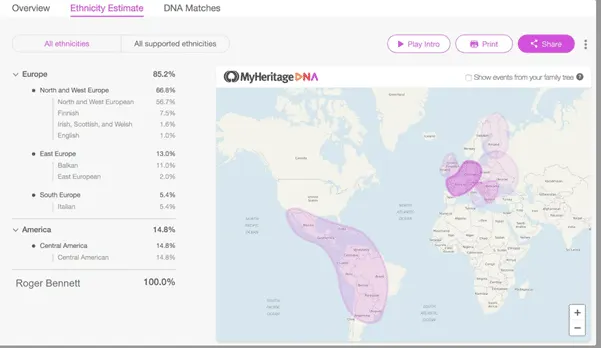
MyHeritage
MyHeritage is focused on family history. It uses Illumina’s Global Screening Array and analyses around 700,000 SNPs.
Reports available: ancestral origins, DNA match finder, family tree builder, historical record checker and photo tools. No haplogroups, no health, no genetic interactions with medication.
Prices: the kit costs €89, with frequent deals bringing it down to €19.90. The Complete Plan —where the match finder and the rest of the features live— costs €99 for the first year and renews automatically.
Your file: you can download it and also upload one from another company.
The best DNA test if genealogy and the family tree are what you care about. Bear in mind that almost all the value is in the subscription: the entry price is low because the real product renews every year.
AncestryDNA
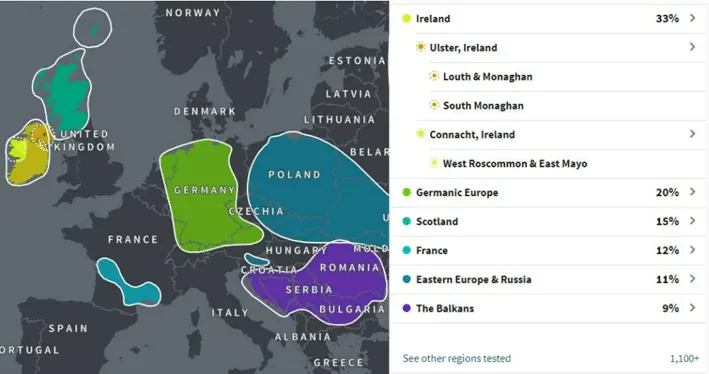
AncestryDNA is another of the sector’s pioneers. It analyses around 700,000 autosomal markers and is focused on ethnic origin and documentary genealogy.
Reports available: origins and ethnicity, DNA matches with relatives, and personal traits. No haplogroups, no health, no genetic interactions with medication.
Prices in Europe: the AncestryDNA with Traits test costs €44.99 plus shipping. The worldwide subscription, which is what unlocks the historical records, costs €59 every six months and renews automatically.
Your file: you can download it, but it does not accept files from other companies.
A good option if your goal is documentary genealogy and you are going to use their historical archive.
Genotyping or whole genome: what you are actually buying
Ordered from least to most information, the genomic analysis technologies are: genotyping, gene panel, whole exome sequencing and whole genome sequencing. Between the first and the last there are hundreds of euros of difference, and it is worth knowing what justifies them.
| Genotyping (chip) | Whole genome (WGS 30x) | |
|---|---|---|
| What it reads | Specific positions chosen in advance | All 3.2 billion of your positions |
| Rare variants | Invisible unless they are on the chip | Yes |
| Future reanalysis | Limited to the chip you happened to get | Yes: the data does not expire |
| Clinical use | No | Yes, if the process is validated |
| Files | Raw | Raw, VCF, BAM or CRAM and FASTQ |
The part almost nobody mentions is that sequencing and interpreting are two different things. A company can sequence your entire genome and then interpret only a fraction of what it read. When comparing two whole genomes, ask three questions:
- Which variant types do they interpret today? Ask about interpretation, which is what ends up in your report. If structural variants are left for “future updates”, you do not have them today.
- Which files do they give you, and with what limits? The Raw is a summary; the real genome is the VCF, the BAM or CRAM and the FASTQ, which are what let you ask for a reanalysis ten years from now, here or anywhere else. Check how many times you can download them too: some companies cap the free downloads per year.
- Is it valid for clinical use? An open application does not give you any guarantee yet.
At ADNTRO the whole genome costs €990, is done from a blood sample, is sequenced at 30x and you take away Raw, VCF, BAM and FASTQ. It is expensive compared with a saliva kit, and it should be: it is a different product.
What your RAW file does not tell you
Almost all of these companies let you download “your data”. That sounds like taking your DNA with you, and it is worth qualifying, because this is where most people get a surprise.
The RAW file contains what that company’s chip read, and nothing more. And chips are not all the same. Two practical consequences:
- If haplogroups matter to you, check who offers them before you buy. The maternal haplogroup is calculated from mitochondrial DNA and the paternal one from the Y chromosome, and neither MyHeritage nor AncestryDNA include haplogroups in their reports. If you buy there looking for your deep lineage, you will not find it — not on the platform, and not afterwards by taking the file elsewhere.
- The file is the ceiling of what another platform will be able to analyse. When you upload your RAW to another company, that company can only work with what comes inside it. That is why two people uploading their file to the same platform can get different reports, depending on the chip each test was run on.
At ADNTRO we accept files from other companies —from genotyping kits and also from third-party sequencing— and we tell you what can be analysed with yours before you pay anything.
Why choose ADNTRO?
This article was written by the ADNTRO team, so read it knowing that. We have tried to make up for it the only way that seems serious to us: every figure in the table is verified on each company’s own website and you can go and check it, and when another company is the better option for a particular goal, we say so.
That said, these are the three reasons we believe we are the most complete option:
- We cover both technologies. A genotyping kit from €109 and a whole genome valid for clinical use. No other company in this comparison offers both at this depth.
- Your data leaves with you. We give you the Raw and, with the whole genome, VCF, BAM and FASTQ as well. We do not sell your data to third parties.
- We accept other people’s work. If you already took a test with another company, upload your file and open your reports without paying for a kit again.
And a warning that applies to all of them, us included: a consumer genetic test does not diagnose anything. It gives you information about predispositions and about how your body processes certain medications. That information becomes valuable when you take it to your doctor. Never change a treatment on your own.
Genetics has an influence, but on its own it doesn't determine your health, your behavior, or your future.