As there is common male pattern baldness, although to a lesser extent, baldness can occur in women. It is what is technically known as female pattern hair loss. This type of baldness excludes external causes such as stress, injury or side effects of a drug or treatment.
Features of female baldness
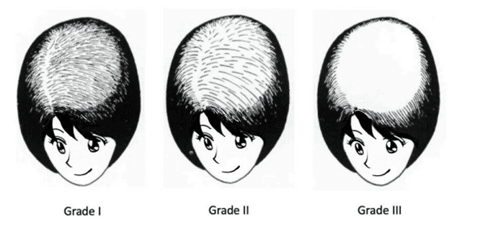
Female baldness is the disorder of hair loss. It is characterized by gradual hair loss in the central and frontal regions of the scalp, but preservation of the hairline on the forehead.
Causes of female baldness
Although male and female baldness have similarities, the process by which both pathologies develop differs. Most studies in this field point to hormones because the onset of female baldness peaks after menopause when hormonal changes occur.
Androgens are involved in causing pattern hair loss in some women. Androgen levels in women progressively decrease from the early fourth decade and this parallels the gradual reduction in scalp hair density and diameter in the female population that occurs with advancing age. However, it is likely that other, as yet unidentified, non-androgenic factors play a role in the cause of female baldness.
Alopecia is often mentioned as a feature of polycystic ovary syndrome, although it is less frequent than one of the main symptoms: excessive hair growth in women.
Hair growth begins under the skin in structures called follicles. Each follicle produces a new hair with a life cycle consisting of 3 phases:
- Anagen or growth phase.
- Catagen or transition phase.
- Telogen or resting phase that ends with hair loss and the beginning of a new cycle.
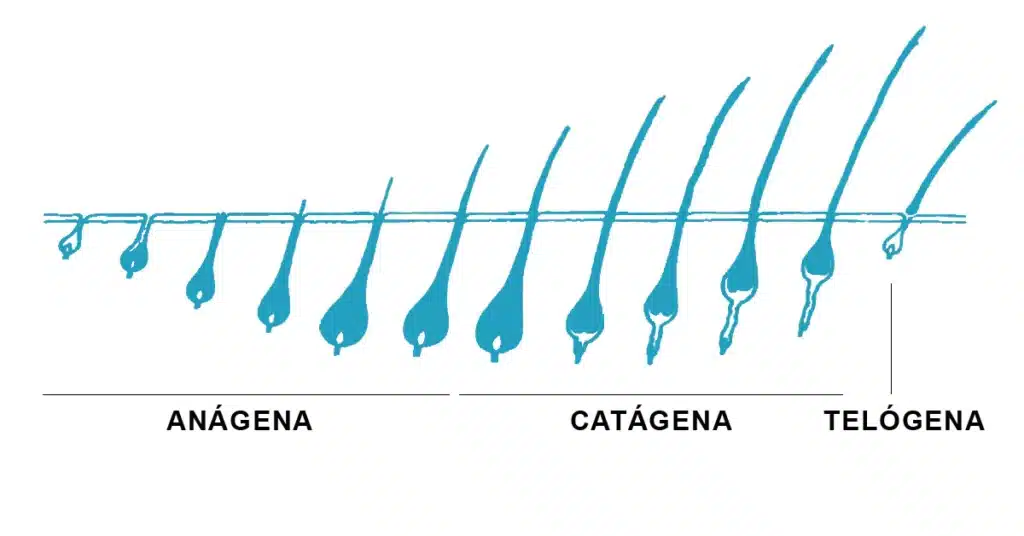
As in male baldness, female baldness shows a reduction in the duration of the anagen phase and a prolongation of the telogen phase.
Nutrition and female baldness
Vitamin D receptors (VDR) are known to be expressed in hair root cells (follicular keratinocytes) and play a role in the regulation of hair growth. Affected hair follicles in baldness show relative nutritional deficiency, but nutrient absorption is not impaired.
However, no genetic variants in vitamin D receptors that could confirm these findings have yet been found.
Genetics and female baldness
The world of genetics in female alopecia is a field yet to be explored. Association studies have been carried out in a European population between the aromatase (CYP19A1) and estrogen receptor 2 (ESR2) genes, both related to the transformation of sex hormones.
The ESR2 gene encodes estrogen receptor beta, the target estrogen receptor. Variations in this gene can alter estrogen signaling and downstream molecular pathways, leading to disease progression.
The CYP19A1 gene encodes aromatase, an enzyme responsible for the conversion of androgens to estrogens. Genetic variants of CYP19A1 can alter the balance between estrogen and androgen levels, resulting in this disorder.