
How genetics influences the effects of alcohol and caffeine
Why do some people feel worse when they drink alcohol or coffee activates them more? Find out how genetics influences alcohol and caffeine
Updated on November 19, 2025

Have you ever questioned how it is possible that some people can enjoy a cup of coffee in the afternoon and still sleep peacefully, while others stay up all night? Or why some people feel terrible drinking even a small amount of alcohol, while others seem to be drinking a soft drink? The answer lies in your genes. In this article we will look at how genetics influence the effects of alcohol and caffeine.
Caffeine and genetics
Caffeine is a psychoactive substance. It is among one of the most widely consumed central nervous system stimulants in the world. Caffeine has the ability to trick your brain into feeling more awake and focused. It works by blocking an internal messenger, adenosine, which communicates to your brain that it’s time to relax. With adenosine out of the way, caffeine allows other brain chemicals, such as dopamine, to take the wheel, providing a shot of energy and mental clarity.
Caffeine is metabolized by the CYP1A2 gene. It is a gene involved in the metabolization of many substances, including caffeine.
Depending on genetics, caffeine metabolization can be fast, intermediate or slow, thus classifying people into three groups:
- Fast metabolizers: this genetic profile will eliminate caffeine faster and the effect of caffeine will be less hesitant in the body. For this reason, it is not surprising that this genetic profile usually tends to drink more coffee.
- Intermediate metabolizers: the breakdown of caffeine in the organism of people with this genetic profile is average.
- Slow metabolizers: the genetics of this group will cause slow caffeine metabolization. Slow metabolizers who drink a lot of coffee (3 or more cups a day) have been associated with an increased risk of cardiovascular disease. They may also experience more problems falling asleep or getting a good night’s sleep.
It is estimated that genetic variants determine approximately 75% of the activity of the enzyme encoded by the CYP1A2 gene. The remaining 25% is influenced by supplements, tobacco and food:
- Vegetables such as cabbage, cauliflower and broccoli slightly increase the breakdown of caffeine.
- Natural supplements such as turmeric, peppermint, chamomile or dandelion slightly decrease caffeine metabolism.
Alcohol and genetics
The chemical substance in alcohol that affects our body is ethanol. Ethanol is found in alcoholic beverages, such as wine, beer and spirits. Ethanol consumption can have psychoactive effects, including feelings of euphoria and relaxation, although excessive consumption can lead to both short-term and long-term negative effects, including intoxication, dependence and various diseases. Ethanol acts on the central nervous system, and its effect can vary considerably depending on the amount consumed, the context of consumption, and the individual characteristics of the consumer.
At the level of metabolism, ethanol is first broken down by an enzyme called alcohol dehydrogenase (encoded by the ADH1B and ADH1C genes), which helps convert it to acetaldehyde. In the second step, the enzyme acetaldehyde dehydrogenase (encoded by the ALDH2 gene) helps convert acetaldehyde to acetate, a compound that can be easily excreted.
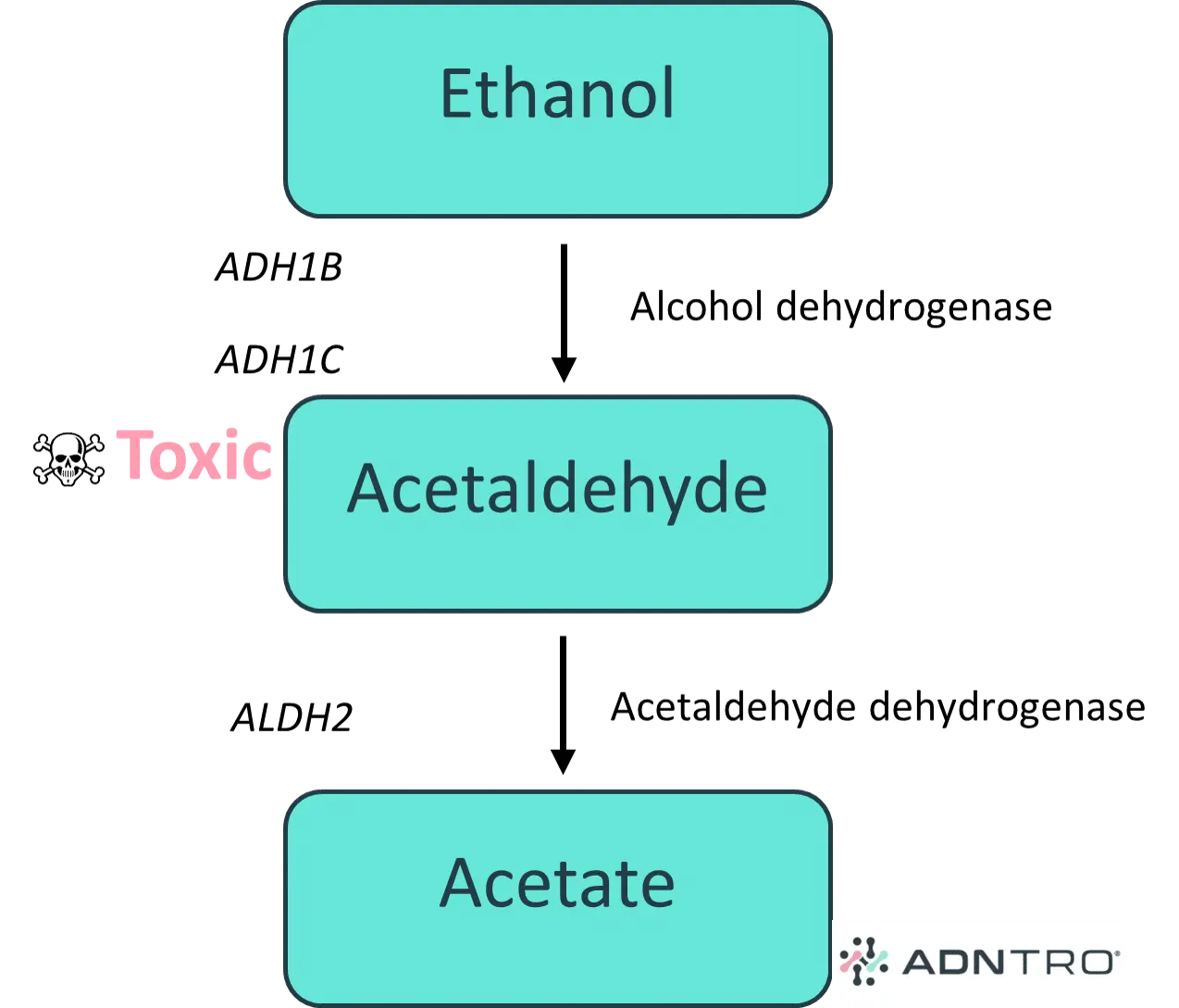
The faster the alcohol dehydrogenase enzyme works, the greater the amount of acetaldehyde in the body (toxic). And the faster the acetaldehyde dehydrogenase enzyme works, the lower the amount of acetaldehyde in the body and the greater the secretion of ethanol in all its forms.
Genetic variants in the genes involved in the metabolization pathway allow people to be classified into different groups:
- Slow metabolizers: they present genetic variants that slow down the conversion of ethanol into acetaldehyde (toxic substance), creating a lower accumulation of acetaldehyde in the body.
- Intermediate metabolizers: the speed of enzymes involved in the breakdown of alcohol is normal.
- Fast metabolizers: they present genetic variants that accelerate the conversion of ethanol into acetaldehyde (toxic to the body), creating an accumulation of acetaldehyde. Fast metabolizers reduce the risk of alcoholism because alcohol causes them discomfort.
- Possibly intolerant: they present a genetic variant that slows down the conversion of acetaldehyde to acetic acid creating an accumulation of acetaldehyde (toxic substance) due to the difficulty in completing the second phase of the metabolization pathway and its subsequent excretion.
- Intolerant: they present two genetic variants that slow down the conversion of acetaldehyde to acetic acid, creating a large accumulation of acetaldehyde (toxic substance) due to the difficulty in completing the second phase of the metabolization pathway and its subsequent excretion.
Genetics has an influence, but on its own it doesn't determine your health, your behavior, or your future.