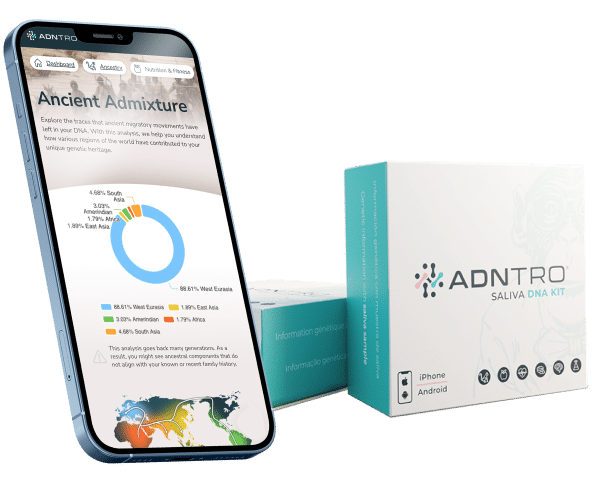
Have you ever wondered where your traits, build, or certain health tendencies that run in your family really come from? Oral history has its limits, and traditional family trees only go so far. Today, DNA testing makes it possible to go much further: to access concrete information about your ancestors, your ethnic composition, and potential genetic risk factors.
In this article, you will find a clear guide to understanding how this process works, what you need to get started, and how to interpret the results in a useful and responsible way.
Key Points
| Point | Details |
|---|---|
| Benefits for your well-being | Discovering your genetic origin can provide information to help you improve your habits and prevent risks. |
| Need for reliable suppliers | Choose companies with large databases and a strong reputation for more accurate results. |
| Simple step-by-step guide | The whole process, from ordering the kit to understanding the results, is accessible to any adult. |
| Limitations in interpretation | Understand that results may vary depending on your ancestry and database updates. |
Why discovering your genetic origin can transform your self-knowledge
Knowing your genetic origins is not just about satisfying curiosity. It's a gateway to deeper self-knowledge that can influence concrete decisions about your well-being, lifestyle, and cultural identity. More and more people are resorting Genetic ancestry tests can help people learn about their roots, although it's important to note that high accuracy is mainly found in European populations and that results may change with new databases.
The benefits of exploring your DNA go far beyond finding out whether you have Viking or Indigenous ancestry. Here are the most relevant ones:
- Cultural and family connection: Discovering unexpected ethnic mixtures can open up valuable family conversations and connect you with traditions you did not know about.
- Disease prevention: Some tests, such as ADNTRO’s, identify genetic variants associated with conditions such as type 2 diabetes, cardiovascular disease, or certain types of cancer. Using that information to improve your well-being It is one of the most powerful uses of modern genetics, although it is always important to consult with a health specialist.
- Motivation to change habits: Knowing that you have a genetic predisposition to a certain condition can be the push you need to adjust your diet, physical activity, or preventive routines.
- Understanding physical and behavioral traits: From lactose tolerance to exercise response, your DNA explains many things that once seemed random.
The benefits of direct-to-consumer genetic tests are broad, but they also require you to choose a reliable test. Not all tests are the same: some are entertainment tools with little scientific basis, while others use updated databases that provide much more accurate and useful results.
“The most valuable genetic self-knowledge is not just knowing where you come from, but understanding how that information can guide your health decisions today.”
The key is to choose a test that combines scientific rigor with clarity in the presentation of results. That way, the data does not remain just a number on a screen, but becomes actionable information for your daily life.
Now that you know why exploring your DNA may be worthwhile, let’s look at what you really need before getting started.
What you need before getting started: tools and basic requirements
Before buying any kit, it is worth doing a bit of research. The genetic testing market has grown enormously, and not all options offer the same quality, privacy, or usefulness. Preparing well from the start will save you frustration and give you more meaningful results.
The first thing you should consider is the provider’s reputation. Prioritize companies with strong reviews on platforms like Trustpilot and frequent updates to obtain better results in DNA matches.
Here is a basic comparison of the elements you should evaluate:
| Criterion | What to look for | Why it matters |
|---|---|---|
| Update frequency | Regular updates | More accurate results over time |
| Privacy Policy | Data not shared without consent | Protection of your genetic information |
| Type of analysis | Ancestry, health, traits | More value for your investment |
| Support | Publications and expert backing | Greater reliability of the results |
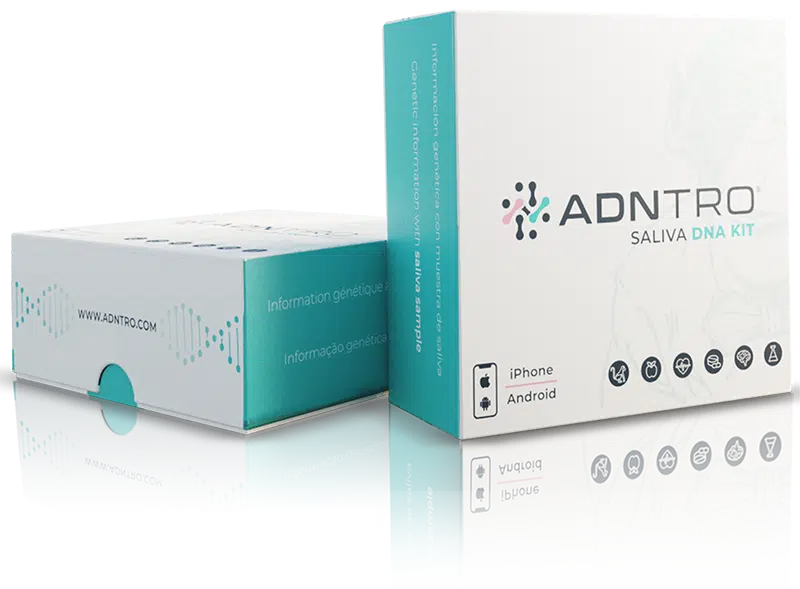
If you are interested in the most comprehensive analysis possible, consider options that include both ancestry and health markers, such as the ADNTRO Premium KIT.
Pro tip: Avoid very low-priced kits that do not specify the size of their database or publish information about their methodology. Scientific transparency is a key sign of quality.
With everything ready, it is time to discover how the process works step by step.
How to discover your genetic origin step by step
The process is simpler than it seems. From the moment you purchase the kit to the time you receive your results, it generally takes between 4 and 6 weeks. Here is the full journey:
- Purchase your kit: Choose a reliable provider and buy your DNA kit directly from their website. It will arrive at your home within a few days.
- Register the kit: Before taking the sample, activate your kit on the provider’s platform using the included code. This step links your sample to your profile.
- Take the sample: Follow the instructions carefully. This usually involves either spitting into a tube or swabbing the inside of your cheek.
- Send the sample: Use the return envelope included with the kit. Make sure to seal it properly and send it back as soon as possible to preserve the quality of the DNA.
- Wait for the results: You will receive a notification when the laboratory has processed your sample. The results will appear in your online profile.
- Interpret the data: Explore the ancestry maps, ethnic percentages, and, if the test includes them, health markers and traits.
It is important to distinguish between tests intended more for research purposes and a clinical analysis. Direct-to-consumer kits are accessible and useful for exploring your origin and other aspects of your DNA, but for clinical accuracy when there is a specific medical concern, the right choice is to use other types of genetic tests such as Whole Genome.
Combining genetic results with traditional family genealogy greatly increases the value of the information. Talk to your older relatives, review historical documents, and compare that data with what your DNA reveals. Even the influence of genetics on personality can make more sense when you connect it with your family history.
Pro tip: If your immediate family members are willing to take the test, combining the results of parents and children provides a much more complete picture of your family’s genetic inheritance.
After completing the procedure, questions and expectations about the results naturally arise. It is essential to understand both their scope and their limitations.

Limitations, accuracy, and tips for interpreting your results
DNA tests are powerful tools, but they are not perfect. Understanding their limitations will help you interpret the results realistically and get the most out of them without drawing mistaken conclusions.
Accuracy varies greatly depending on the type of analysis:
- Fine-scale ethnicity: Accuracy drops considerably here. Distinguishing between, for example, Portuguese and Spanish ancestry can be difficult for current algorithms.
- Underrepresented populations: Genetic testing inequity is real; individuals of African or Indigenous descent have lower accuracy in their results due to database biases that have historically included more samples from European populations.
- It is not a diagnosis: these types of tests speak to predispositions, but they are not a clinical diagnosis in any case. For a diagnosis, it is always necessary to review the information with a healthcare professional.
Other key aspects you should keep in mind:
- Results can change over time. When the provider updates its studies or improves its algorithm, the percentages may vary. This is not an error, but an improvement.
- Genetic diversity and precision of results depend directly on how many samples similar to yours exist in the provider's database.
- If the test reveals information about health risks, do not make medical decisions based solely on that data. Always consult a healthcare professional.
- Protect your privacy: check whether the company sells data to third parties and enable all the privacy options available in your profile. At ADNTRO, for example, no personal data is requested when activating the KIT, no family matching is carried out, and samples are destroyed once results are delivered, so security is complete.
“A genetic result is a starting point for reflection, not a verdict. Use it to ask more questions, not to draw final conclusions.”
Understanding your genetics and metabolism, for example, can perfectly complement ancestry information and help you make more personalized decisions about nutrition and well-being.
You now have a clear view of the limitations. It is time to explore how these insights transform your self-knowledge through experience.
Our perspective: what no one tells you about discovering your genetic origin
There is something DNA testing tutorials rarely mention: the result itself is only 20% of the value. The other 80% depends on what you do with that information afterward.
Many users receive their ethnic percentages, share them on social media, and that is where the process ends. But real genetic self-knowledge happens when that information sparks a conversation with your grandmother, motivates you to research the history of a region that appears on your map, or leads you to review your health habits with better information.
We also see a common mistake: overestimating accuracy. The numbers may seem objective, but ethnic percentages are statistical estimates, not absolute truths. Combining genetics with traditional genealogy is what truly gives depth to self-knowledge.
Take the step: access a secure and comprehensive genetic test
If you have made it this far, you already have the knowledge to make an informed decision about your first DNA test. The next step is to choose a tool that combines scientific rigor, clear results, and respect for your privacy.
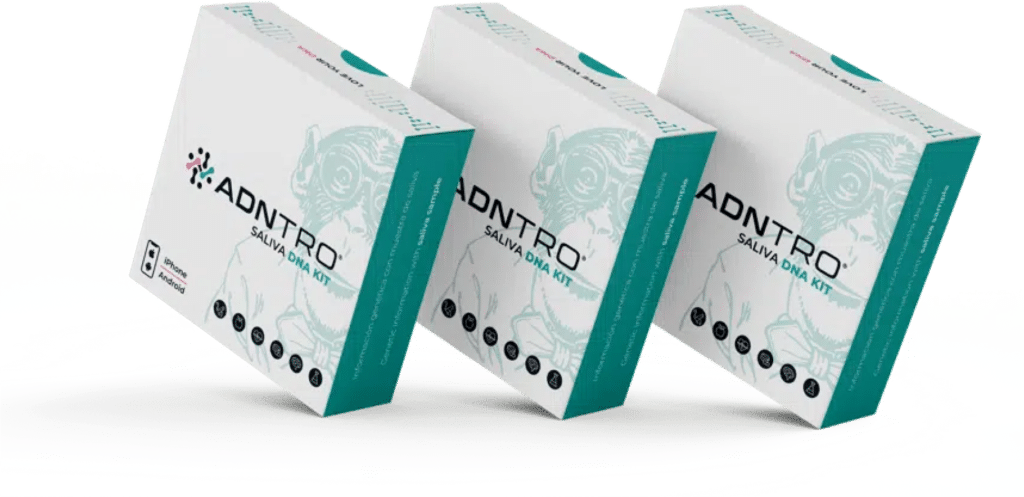
At ADNTRO, you will find an advanced genetic test designed to give you real information about your origin, your health, and your traits, presented in a visual and easy-to-understand way. You do not need to be a scientist to understand your results. Our team has developed clear reports that turn complex data into useful knowledge for your everyday life. Ready to get to know yourself better? Buy your DNA test today and begin your journey of genetic self-discovery.