
Chronotype and Genetics
Did you know that our genes influence our biological clock? Find out how chronotype and genetics are related here.
Updated on November 10, 2025
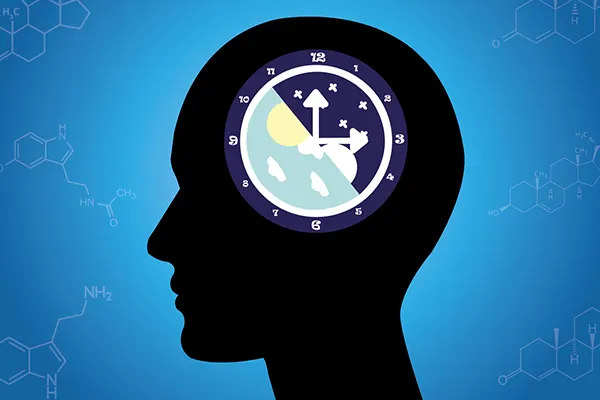
Circadian rhythms are fundamental cyclical processes that occur in most living organisms, including humans. The circadian rhythm refers to an underlying 24-hour physiological cycle that occurs in most living organisms. In humans, there are clear daily cyclical patterns in core body temperature, hormonal systems, and most other biological systems.
These cycles are important for many molecular and behavioral processes. In particular, circadian rhythms are important for regulating sleep patterns, allowing the organism to anticipate and adapt to regular environmental changes, optimizing its biological functions for different times of the day. For example, the release of melatonin, a hormone that induces sleep, increases during the night in response to darkness, helping to prepare the body for rest.
Types of chronotypes
When we talk about chronotype, despite each species having an endogenous circadian rhythm, there are significant natural variations in the population. People with later circadian rhythms tend to sleep better if they go to bed late and wake up later, so they are often called “owls” or “night people.” Those with earlier rhythms tend to feel sleepy earlier at night and wake up early in the morning. The rest of the population falls between these two extremes.

This dimension of circadian timing, or chronotype, is a behavioral consequence of the organism’s underlying cycles. For this reason, depending on your chronotype, your peak performance hours will vary:
- If you are a morning person, sleep will overtake you between 9:00 PM and 9:30 PM, and by 4:00-5:00 AM, you will be up and moving.
- If you are more of a morning person than an evening person, your schedule won’t be as extreme as the one above. Your body will prompt you to go to bed between 9:30 PM and 10:45 PM, waking up optimally between 5:00 AM and 6:30 AM.
- If you have an intermediate chronotype, you will tend to go to bed between 10:45 PM and 12:45 AM, waking up between 6:30 AM and 8:30 AM.
- If you are more of an evening person than a morning person, you will tend to go to bed between 12:45 AM and 2:00 AM, and you will be up and moving between 8:30 AM and 10:00 AM.
- If you are an evening person, you will tend to go to bed between 2:00 AM and 3:00 AM, waking up optimally between 10:00 AM and 11:30 AM.
The role of genetics in chronotype
Factors such as age and gender, as well as levels of ambient light, account for a substantial proportion of the variation in chronotype, but genetic variation is also an important contributor.
The PER2 gene (Period Circadian Regulator 2) is one of the genes involved in the regulation of the circadian rhythm as it plays a crucial role in internal synchronization.
Genetic variants located in this gene, among others, are associated with the variability of chronotypes that exist in the human species, highlighting their importance in these biological processes.
Chronotype and health
The importance of sleep is indisputable. Alterations in circadian rhythms and chronotype can have significant health implications. For example, a mismatch between a person’s chronotype and their work or school schedule can lead to insufficient sleep and a higher incidence of sleep disorders. Additionally, changes in chronotype have been found to be related to the risk of developing metabolic diseases, such as diabetes, and psychiatric disorders, such as depression.
Genetics has an influence, but on its own it doesn't determine your health, your behavior, or your future.